Football’s Key Evolutions
While the rules of football have remained almost unchanged (save for the introduction of offsides and a few tweaks here and there) since the nineteenth century, the manner in which it is played has evolved constantly.
Owing to English rugby clubs’ significant involvement in football’s formative years, early football matches were played much more in line with popular rugby tactics. Each team would typically field either a 2-2-6 or a 1-2-7, with a view that attackers dribbling in straight lines would stretch defences as much possible. While this meant that there were lots of turnovers – given that passing was an afterthought – the ball was mostly in play with few stoppages.

In 1866, rules were changed to allow forward passing (until this point, passing rules were almost the same as what rugby’s are today), which set the ball in motion for football to become what it has today.
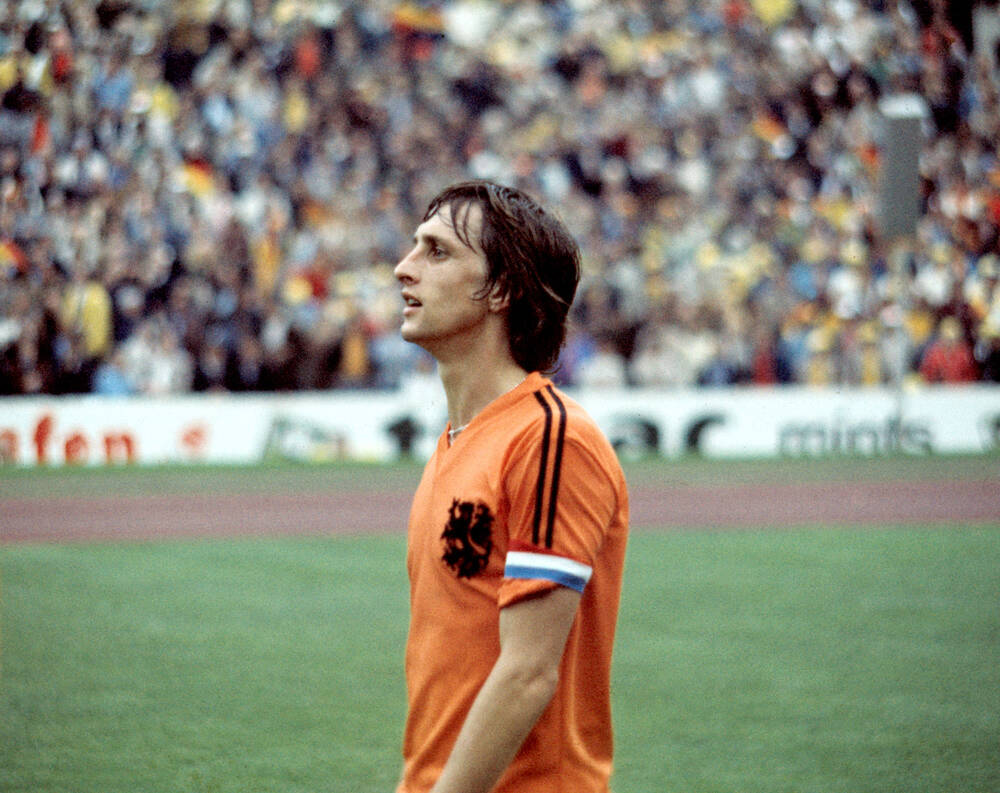
Styles such as Gustav Sebes’ Hungary – nicknamed the ‘golden team’ in the 1950s and Rinus Michel’s ‘total football’ with Netherlands in the 1970s both emphasised the importance of creating space and drawing opponents apart by keeping the ball – in particular, keeping the ball in play for sustained periods. In doing so, they laid the platform for football in the 2000s to become more fluid and fast-paced than it had ever been, and the formula for winning games became system-driven, using tactics established around a team’s most talented individuals.
Swinging the Percentages
Johan Cruyff and then Pep Guardiola as managers of Barcelona were the figureheads behind this: they established formations and tactics which suited their team’s players brilliantly. The result for a generation was one where the gap between football’s elite clubs and those without world-class players only grew (aided further by the huge injection of money that football received in the 2000s).
As such, coaches of smaller clubs began to establish ways of shutting out high-quality opposition, rather than going toe-to-toe with them. This was already a common tactic, but Guardiola’s impact took it to a new extreme. Games became attack vs defence, where one team would control possession and wear defences down through their team’s positional play rather than individual quality (although of course, it was the teams with the better players who could employ high-level positional play).
To combat this, set-pieces became a vital way for smaller clubs to compete with the big boys. Tony Pulis’ Stoke City were prime examples of this. They were experts in engaging the ‘dark arts’: tactical fouls, long throw-ins, time-wasting etc. to swing the odds in their favour.

Yet as the quality (and financial power) of football clubs grew through the 2010s, big clubs started to lose their advantage in quality as the standard of ‘smaller’ clubs improved.
The result has been that matches are now decided by finer margins than ever. More often than not, both teams have the ability to beat the other on their day. With football being a low scoring, high variable sport, it has become a case of managers being desperate to control what they can, to pick up 1% gains wherever possible.
That brings us, in a very roundabout way, to the importance of set-pieces. Where once they were a means for small clubs to give themselves a chance against superior opponents, they have become the source of some of those marginal gains.
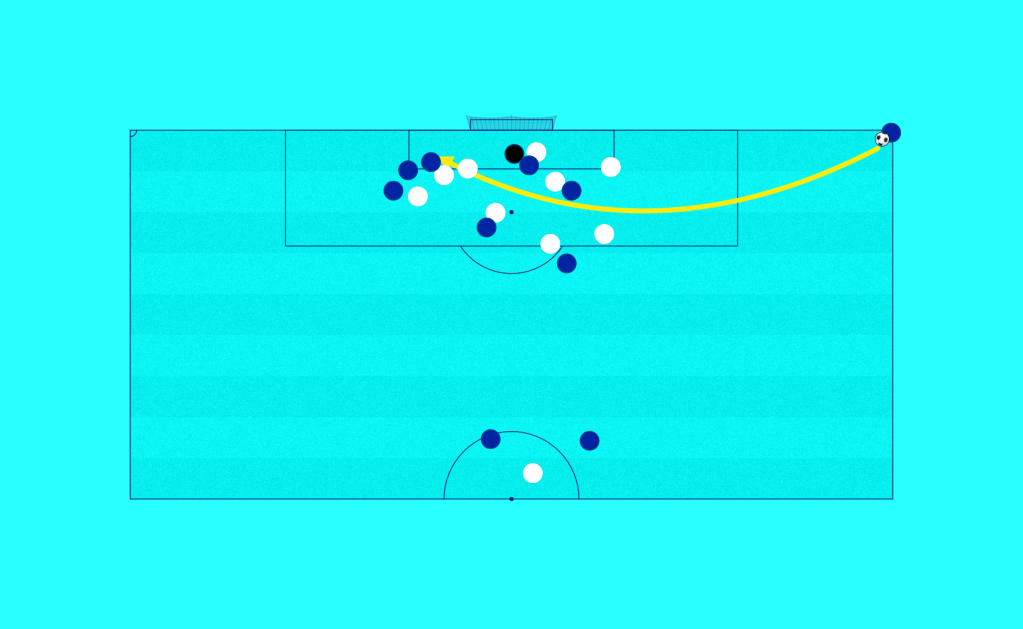
Mikel Arteta’s Arsenal were the first to employ this belief a couple of years ago and nearly won the league courtesy of scoring almost half of their goals from set-pieces.
This season, every team seems to be placing additional emphasis on set-plays, whether that’s long throws, free-kicks or corners.
Moving the Goalposts
But why does that suggest that football is losing its integrity?
American football is, in ways, similar to football. Both games are staged around one team trying to gain territory over the other with the aim of trying to get the ball into the endzone/goal. The stark difference, aside from the constant violence of American football, is that the American game is very stop-start – with each team given a number of ‘downs’ prior to a turnover. Each of these downs are separated by distinct ‘plays’, meaning that the game constant rotates between in and out of play.
Football, meanwhile, is far more fluid.
Set-pieces arguably put this fluidity in jeopardy. With teams now recognising that they provide a low-risk, relatively high-chance of scoring, they have perhaps started playing ‘for’ set-pieces, rather than with the aim of finding goals from open play.
And we can’t blame them. Why should any team risk possession to potentially create a chance when they could win a set-pieces, which is more likely to yield a higher quality chance anyway?
Arsenal are experts at this, with Bukayo Saka and Leandro Trossard in particular always willing to try and win a corner from their positions on the wing, rather than risking dribbling past a player and potentially giving the ball away. Winning a corner guarantees that they will be able to deliver a cross, and have control over who is positioned where at the time it’s delivered.

This idea of seeing set-pieces as distinct ‘plays’ is akin to an American football manner of thinking, and certainly breaks up the fluidity that has become so synonymous with football.
Closing Thoughts
It’s difficult to suggest any law changes which would be considered a fair attempt at trying to reduce the prominence of set-pieces. Adjustments would likely be viewed as an attempt to stop the teams who are the best at set-pieces – and no one made any rule changes when Guardiola found a way to revolutionise the game.
The question then becomes how far set-pieces have negatively influenced football as a spectacle of entertainment. Fans don’t want to see almost 50% of all goals (as in this season’s Premier League so far) come from set-pieces. To many fans, this compromises the soul of the sport they have grown up to love.
Discussions are reportedly being held around introducing a ‘shot clock’ for throw-ins – to prevent teams treating a set-piece with a primary purpose of getting the ball back in play, as a way to create a chance. Throw-ins are too easy to win, and the current reward for winning one far outweighs the risk that a team employs to get one.
It is this idea risk vs reward which is imperative to football’s integrity. Teams should feel compelled to take risks in order to score goals, or choose to be risk averse in the knowledge that they are unlikely to score. Set-pieces in their current state encourage teams to be risk averse in the knowledge that winning a throw-in or corner can provide them a high-quality chance without taking a risk to get it.
 Pressing Issues
Leave a comment