
Imagine you’re living in Rome almost two thousand years ago. Caesar Augustus is leader of the Roman Empire during some of its finest years. He has already created a dynasty, a legacy, and is currently pursuing further greatness.
Then imagine that suddenly, you hear he’s leaving in three month’s time, and that his successor will be named in due course. Imagine the fear of an uncertain future that would seep into your thoughts. Picture the panic and chaos that would ensue.
This is perhaps akin to what Liverpool fans felt when Jurgen Klopp announced his departure after nine years at Anfield. Fears over a glorious era coming to an abrupt end were intertwined with the sea of thanks and emotional outpouring towards the club’s figurehead.
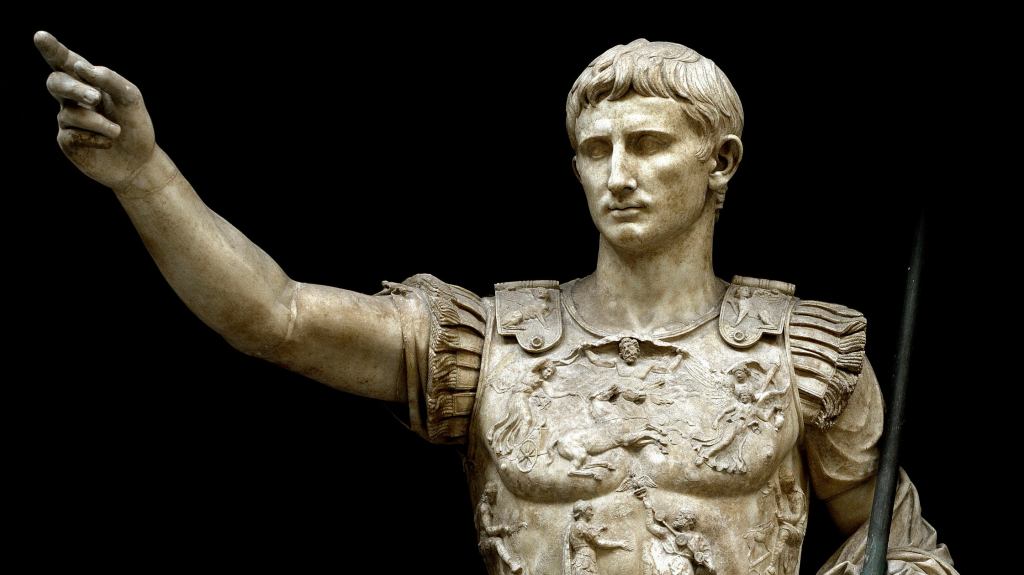
But just as Augustus’ reign marked the start of an illustrious period for the Romans, Liverpool’s post-Klopp era is currently yielding returns that even the most optimistic of Reds’ fans would have been hesitant to predict.
It’s so easy to focus on failures within modern football: Manchester City’s recent demise, Arsenal’s glaring need for a striker and Chelsea’s “billion pound bottle-jobs” as Gary Neville called them, all receive constant coverage for their under-performance. But there should be time allocated to giving teams their flowers. So, what makes Arne Slot’s Liverpool so good?
Transforming A Giant
Klopp departed Liverpool after a disappointing end to the season saw them fall away from the Premier League title race and exit the Europa League in the quarter-final.
There were concerns that the Reds’ squad lacked the quality to go toe-to-toe with other teams for the Premier League title. In addition to this, people questioned Slot’s chances of successfully transforming a team that had, for so long, been indoctrinated in their German boss’ relentless ‘rock and roll’ style of play.
Yet within such a short time-frame, Slot has managed to coach Liverpool into playing a brand of football that is capable of encapsulating the magic, energy and doggedness that was so familiar under the club’s former boss, but also of achieving the control and dominance that Pep Guardiola’s Manchester City has in years gone by.
Slot’s ability to highlight his team’s strengths and mitigate their potential vulnerabilities is perhaps his most commendable achievement.
Beautiful Unpredictability
It is Liverpool’s diversity in attacking approach that sets them apart from anyone else in the Premier League.
They have a squad capable of the penetrative short-passing sequences and incisive dribbles that are necessary in modern football, but are also ruthless on the counterattack and eager to play long balls in behind if the opportunity arises.
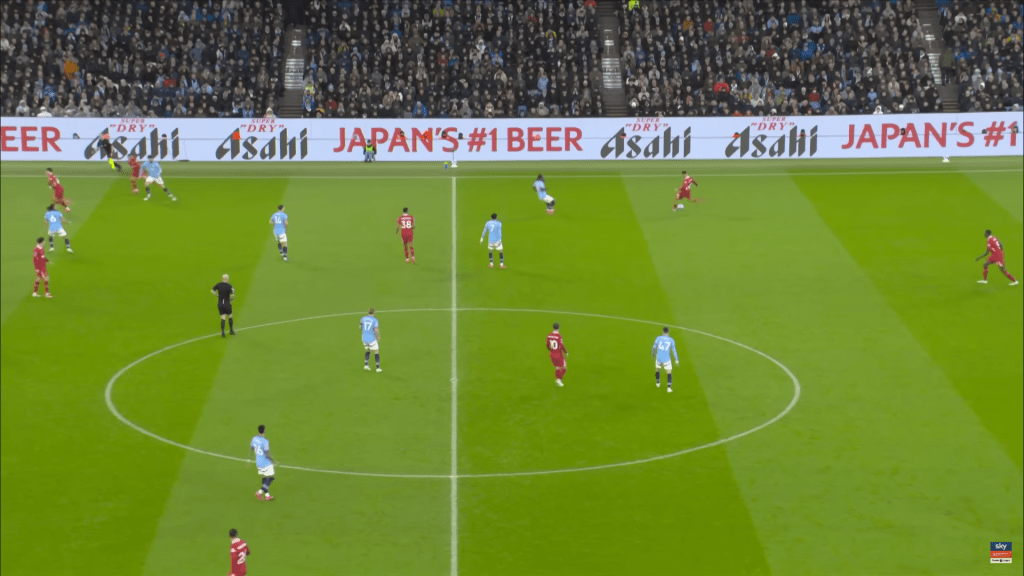
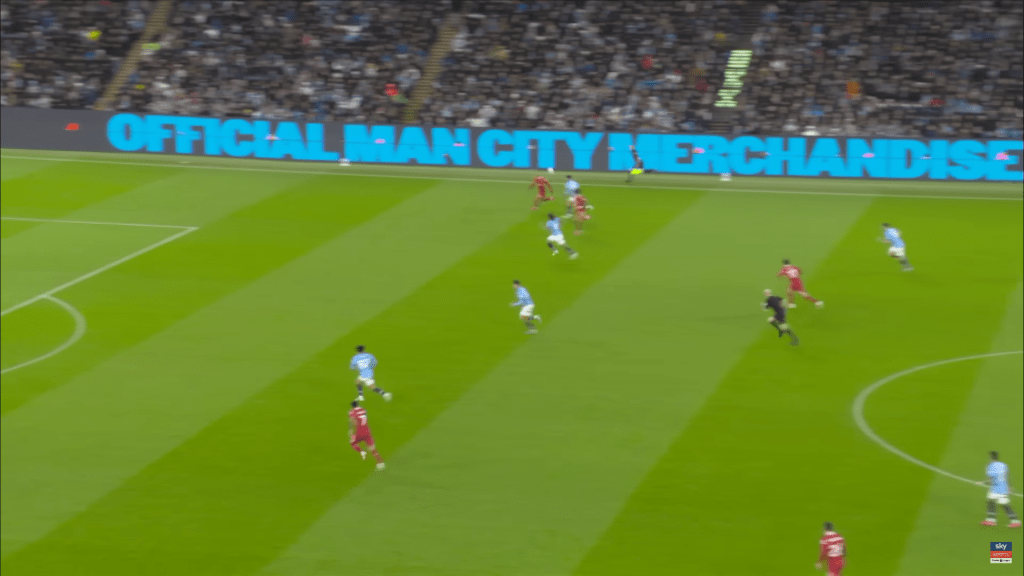
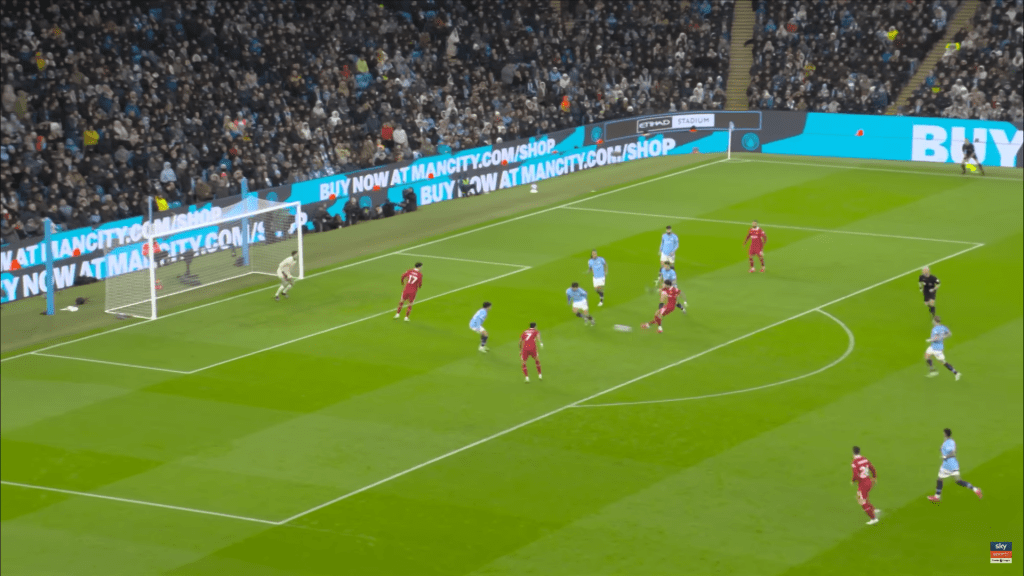
This is the result of Slot’s aim to ensure that his key players are given opportunities to play to their strengths. Trent Alexander-Arnold and Virgil Van Dijk are arguably the two best long-passing defenders in the world, so they are given the creative license to be aggressive with their passing.
Ryan Gravernberch has developed into an impressive pivot player confident receiving the ball and turning to inspire quick passing moves. Luis Diaz, Cody Gakpo and Dominic Szoboszlai have seemingly endless energy and are able to knit together lighting-fast counterattacks that leave defences boggled.
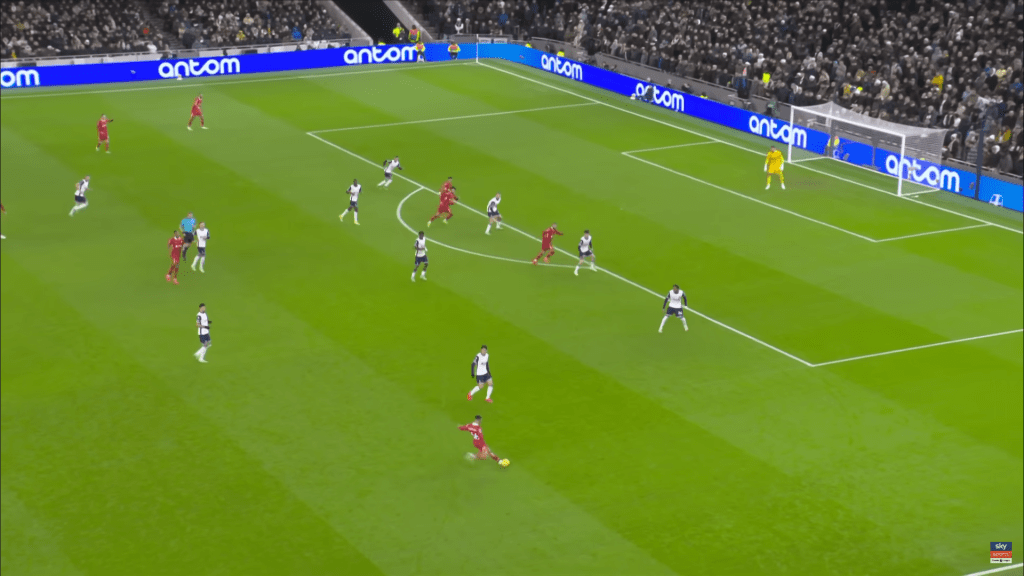
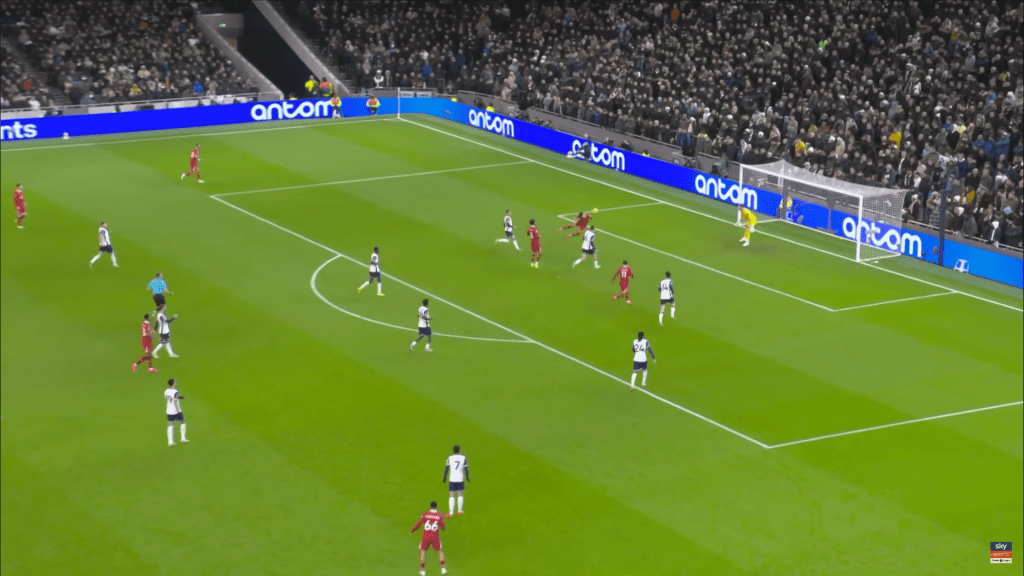
And then you have Mohammed Salah. The icing on the cake. The composer, orchestra and crescendo of Liverpool’s masterful attacking plans. Salah has 42 goal contributions in 28 league games this season. For context, the record for an entire season is 47, held by Alan Shearer and Andy Cole – and the Egyptian King still has 10 games to go.
The efficiency with which they have managed to score has been equally important to their success. During the 2023/24 campaign, Liverpool average 4.1 goal-creating actions per 90 minutes this season (up from 3.4 last season), despite managing 7 fewer shot-creating actions per 90 (29.5 down from 36.5 last season).
| Metric | 2023/24 PL Season | 2024/25 PL Season |
|---|---|---|
| Shot-Creating Actions per 90 | 36.53 | 29.50 |
| Goal-Creating Actions per 90 | 3.45 | 4.18 |
| Through Balls per 90 | 2.68 | 1.75 |
| Shots per 90 | 20 | 16 |
| Big Chances per 90 | 3.4 | 3.9 |
| Average Shot-Distance | 17.2 yards | 16 yards |
| Counterattacks per 90 | 1.13 | 1.66 |
| Dispossessed per 90 | 141 | 121 |
| % of Goals scored from open play | 66% | 64% |
| % of Goals scored from counterattacks | 6% | 20% |
| % of Goals scored from penalties | 6% | 11% |
| % of Goals scored from set pieces | 22% | 6% |
This is indicative that Liverpool are creating fewer chances in total, but they are, on average, of a higher quality. This is also reflected in the figures shown above.
Weeding Out The Weaknesses
If one criticism was ever leveled at Klopp’s Liverpool, it’s that they were ‘too chaotic’ for modern football. The German’s aggressive by nature, which, while proving productive at times, was also risky. Last season, Liverpool players committed 8 errors leading to goals in the Premier League (compared to just 3 this season).
Slot’s arrival has led to a more conservative approach. In the 2023/24 season, Liverpool ranked 2nd and 3rd for final and middle third tackles respectively, indicating Klopp’s determination for his side to win the ball back high up the pitch. This season, the Reds rank 9th and 7th in these metrics.
Less pressing allows Liverpool to create a more solid defensive shape, forcing teams to go through them rather than pressing high and leaving space in behind. The result of this has been that Slot’s side have kept 12 Premier League clean sheets this season – already more than last season’s tally of 10.
From this it could be interpreted that Slot has made an astute – albeit somewhat basic – observation. If he trusts that the world-class players in his squad are enough to win the Premier League, it is far more beneficial for his team to be risk averse and allow his key players to produce goals however they see fit. His transition to a more conservative 4-2-3-1 formation (away from the 4-3-3 that became so iconic of Klopp’s Liverpool), is emblematic of this.
Slot has instilled unto his players a newfound wisdom: the importance of appreciating the ‘game-state’ (the situation of a game at any given time). The Dutchman’s willingness to adapt his side to whatever style is most appropriate at any given moment, and his players’ brilliant understanding of what their coach is asking of them, has led to one of the most efficient, dominant and stress-free Premier League title bids in recent years
Change Can Be Good
When Liverpool won a Champions League in 2019 and backed it up with a league title in 2020, it was difficult to imagine a world in which their smiling, joking German boss wasn’t on the touchline organising his team to strangle any opponents and to not let them off the hook until the final whistle.
Yet, towards the end of his tenancy there were times when Klopp’s side would play like an injured animal lashing out against its best interests. The players knew what they needed to do, but the energy and perhaps confidence to do it was faltering.
Liverpool’s new emperor has taken the pillars of Klopp’s decade-long dynasty and built an empire of his own. The Liverpool fans who were doubting their future are now enjoying absolute prosperity.
 Pressing Issues
Leave a comment