
One of football’s worst kept secrets is that both Sesko and Gyokeres are highly desirable assets being looked at by many top clubs. As a result of this, most clubs will have kept a close eye on Leipzig vs Sporting last night, as the two went head to head.
Sesko Strikes First
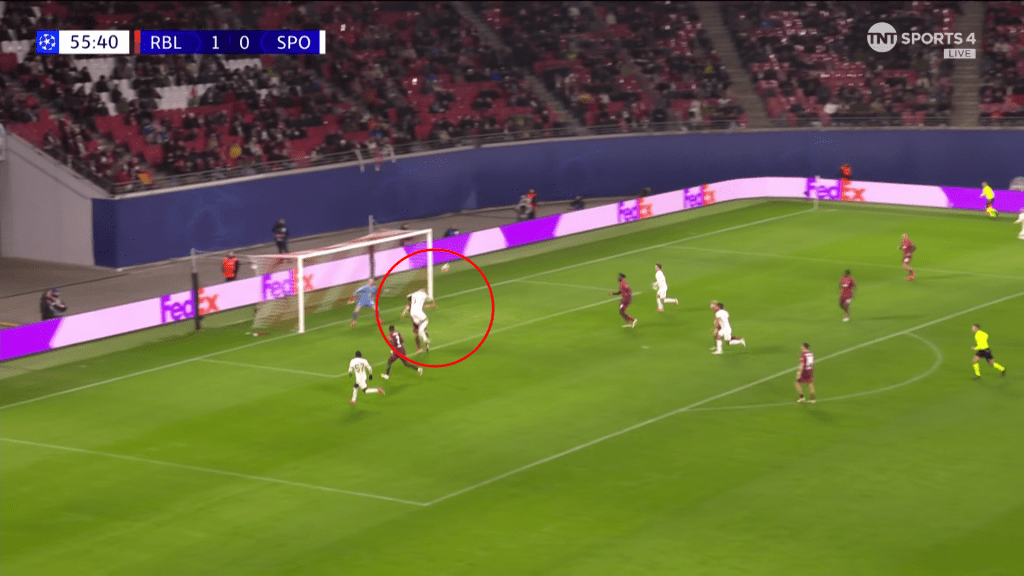
Despite dragging a shot wide in the opening ten minutes, Sesko didn’t take long to open the scoring.
The Slovenian received a pass in the middle third, demonstrated his strength and awareness by backing into a Sporting midfielder and laying the ball off. He then made a direct run to the back post and completed the move with the simplest of finishes.
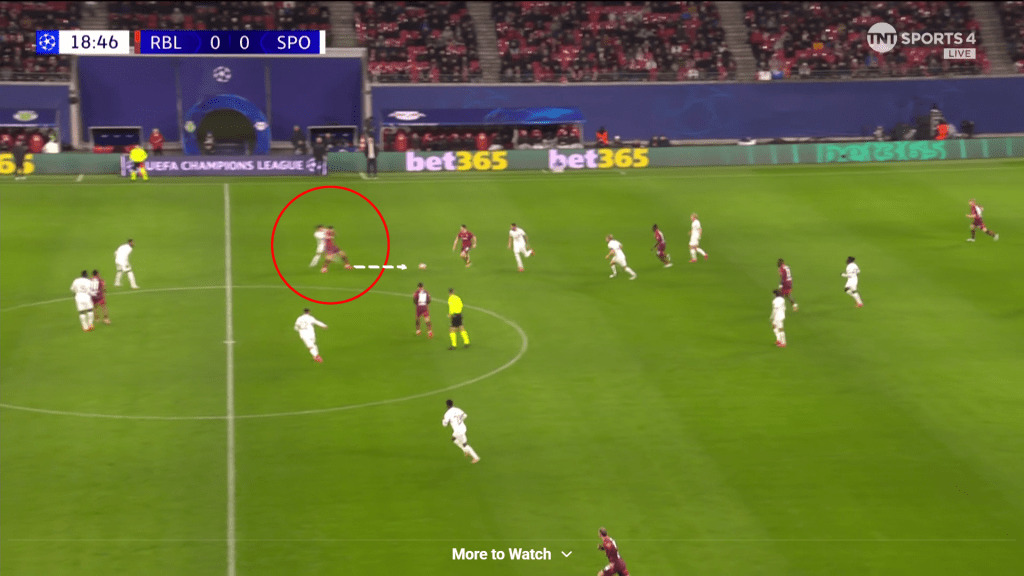
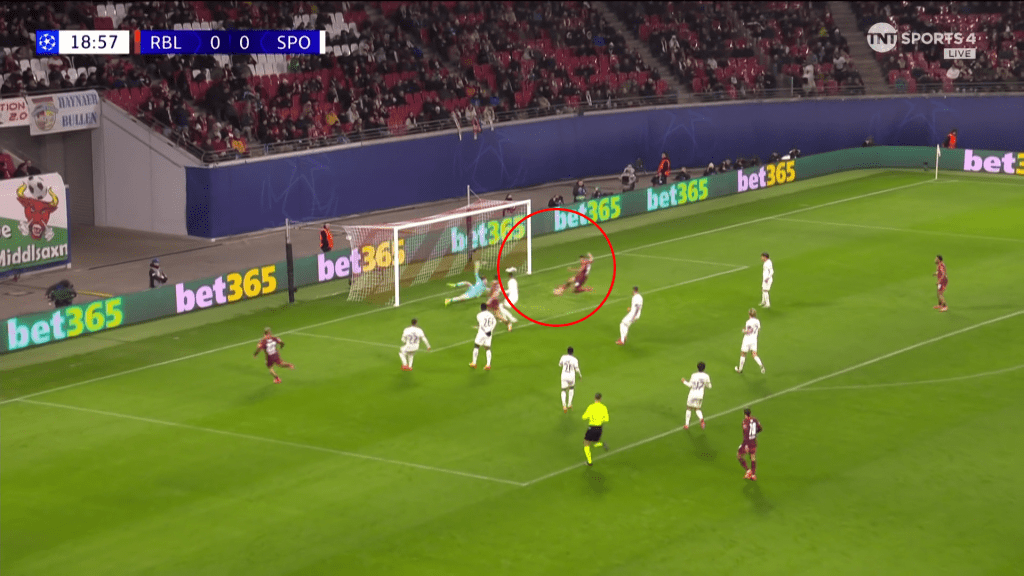
This is testament to Sesko’s all-round ability: he is able to drop deep and receive the ball to affect play. He averages 15.37 middle third touches per 90, ranking him in the top 29% of forwards playing in Europe.
The same thing is shown below, when Sesko finds himself chasing a ball on the right hand side. He wins the ball and provides a neat back heel to maintain possession.
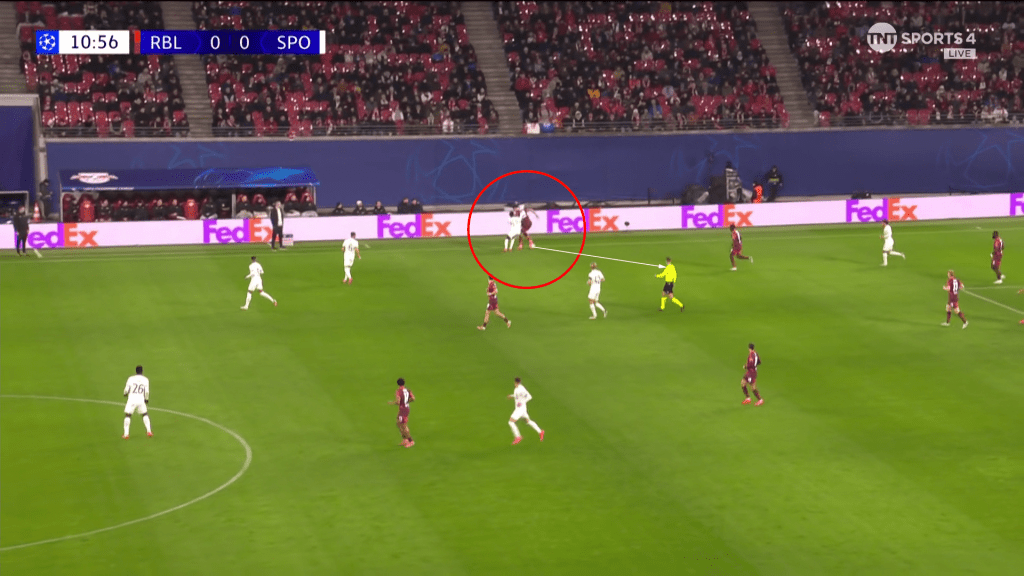
This willingness to run backwards for his team is a perfect example of Sesko’s work-rate. His defensive figures are among the best in Europe in comparison with other forwards – but he doesn’t let this work get in the way of making direct, goalscoring runs.
| Blocks per 90 | Interceptions per 90 | Clearances per 90 | |
| Sesko | 0.75 (top 21%) | 0.25 (top 29%) | 1.21 (top 12%) |
| Gyokeres | 0.19 (bottom 3%) | 0.12 (bottom 30%) | 0.71 (bottom 42%) |

This figures are slightly skewed; Sporting are unequivocally dominant in their league games – averaging 63.6% possession compared to Leipzig’s 50%. Nonetheless, it shows Sesko’s willingness to get involved in games, and in yesterday’s case, it led to a goal.
While Gyokeres is less willing to drop deep to pick up possession (again, potentially due to Sporting’s style of play), he has demonstrated high levels of link up play. The below image details a one-two he played with Sporting’s Francisco Trincao. The Portuguese outfit looked so much more threatening after he entered the fray 55 minutes in.
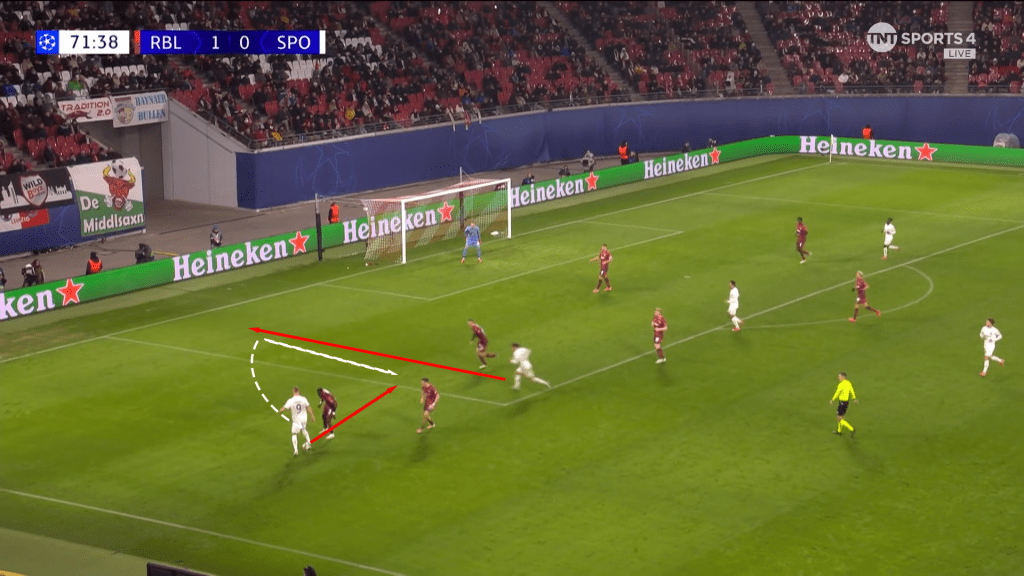
Similar Talents
Of course, strikers aren’t valued based on clearances made per 90. To some clubs they will be judged purely on output: the number of goals they will score when given chances. Other clubs may be in need of a more rounded striker who can contribute more in build up.
This is why both Sesko and Gyokeres are so highly valued. They are fierce, clinical finishers averaging 0.68 (top 6%) and 0.87 (top 2%) goals per 90.
The means by which each players goes about this is very similar. As seen below, Sesko is perfectly happy to wait on the shoulder of the last defender, ready to receive the ball and get a shot away. Equally, Gyokeres has what commentators would call the ‘striker’s instinct’ to run towards the front post when a cross is being delivered. Both players exemplify many qualities that have been evident in top strikers of the past.
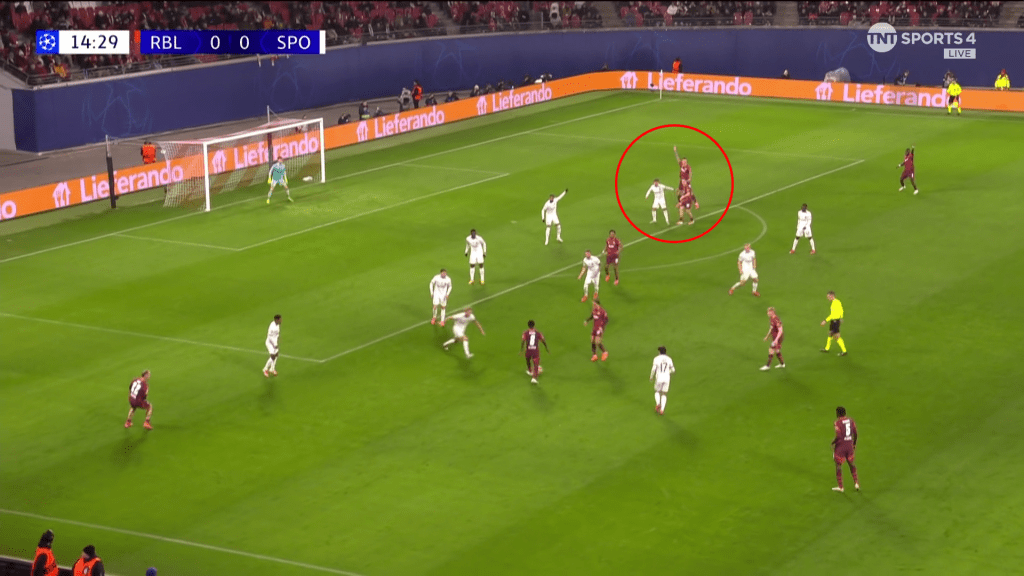
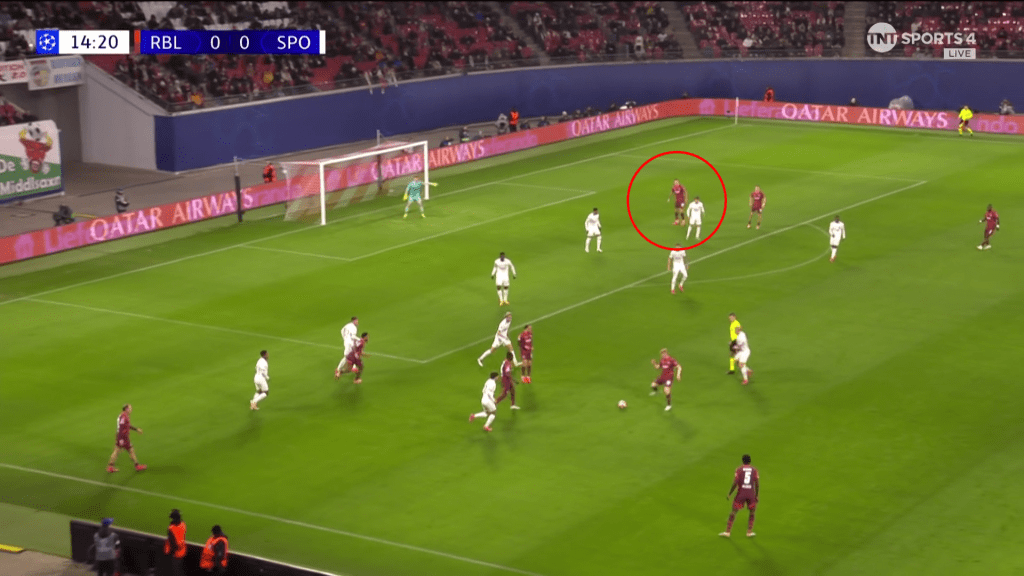
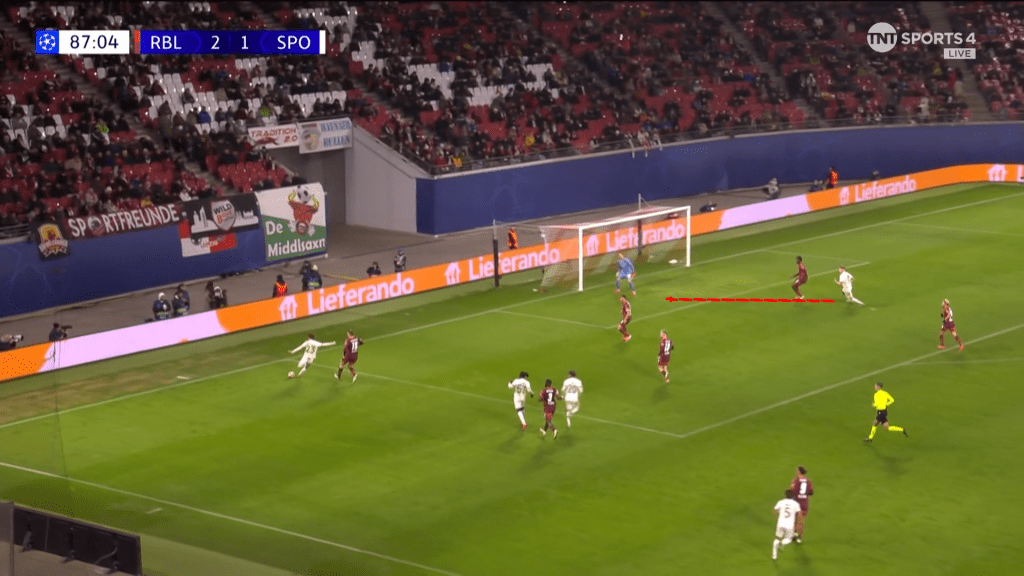
Yet the closest similarity between the two players is their confidence in possession. Both players are able to take on a man, and back their abilities to beat them.
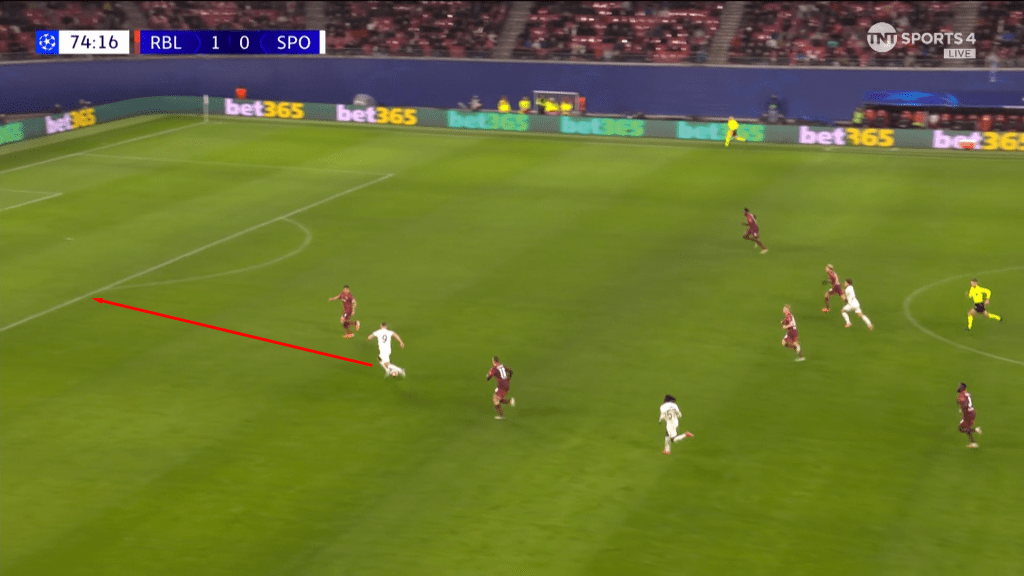
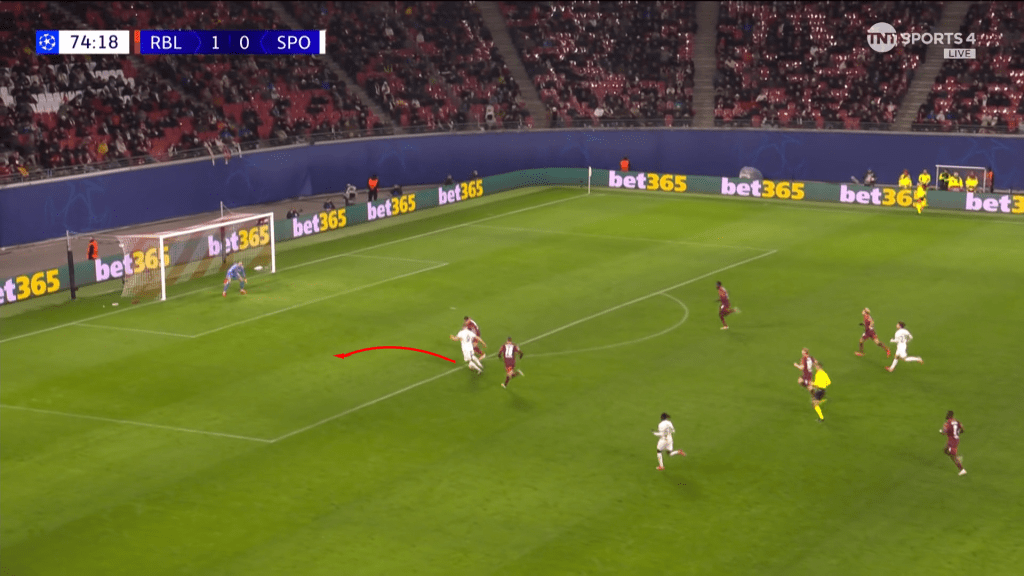
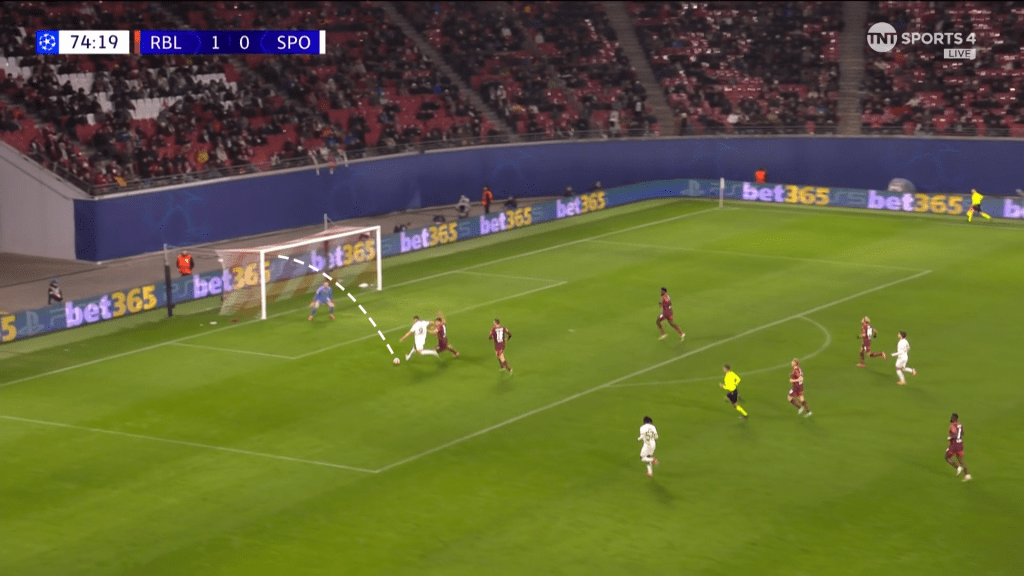
Gyokeres’ goal (above) is the clearest example of this. As soon as he gains possession he has already played through the situation in his head. He knows that he is able to drive at the Leipzig defender, power his way past and release a shot, which on this occasion results in a goal.
The Swedish forward averages 1.95 successful take ons per 90, which puts him in the top 1% in Europe. Sesko produces about half of that at 0.93 per 90. However this is again the result of Leipzig being less dominant than Sporting. The Slovenian has a 44.8% take on success rate, compared to Gyokeres’ 47%.
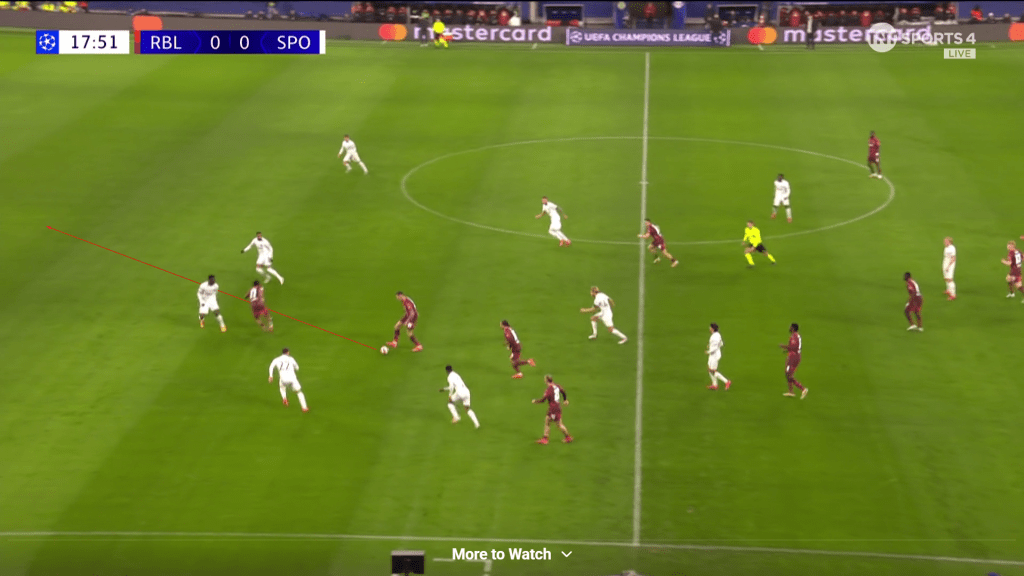
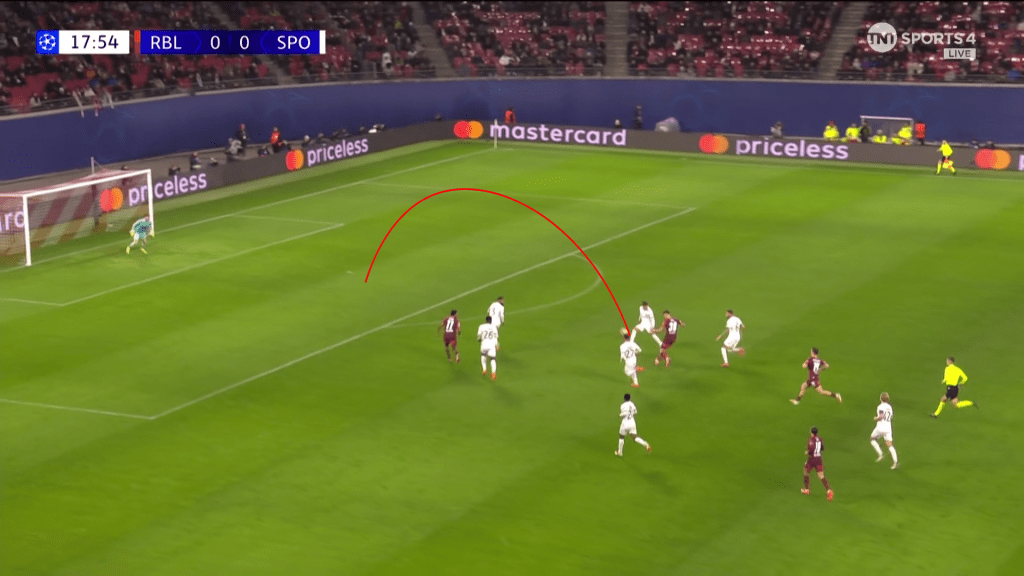
Sesko also demonstrated his ball progressing abilities during the game. As previously discussed, he dropped in to receive the ball, and immediately drove directly towards goal. He attracts the attention of three Sporting defenders, which allow him to play an over the top ball to Lois Openda.
Dominance In All Areas
As previously discussed, Sesko and Gyokeres are very similar. This doesn’t change when it comes to aerial battles either. Sesko averages a 54% success rate with aerial duels, to Gyokeres’ 60%. Both players are elite at ensuring they beat their man to the ball.
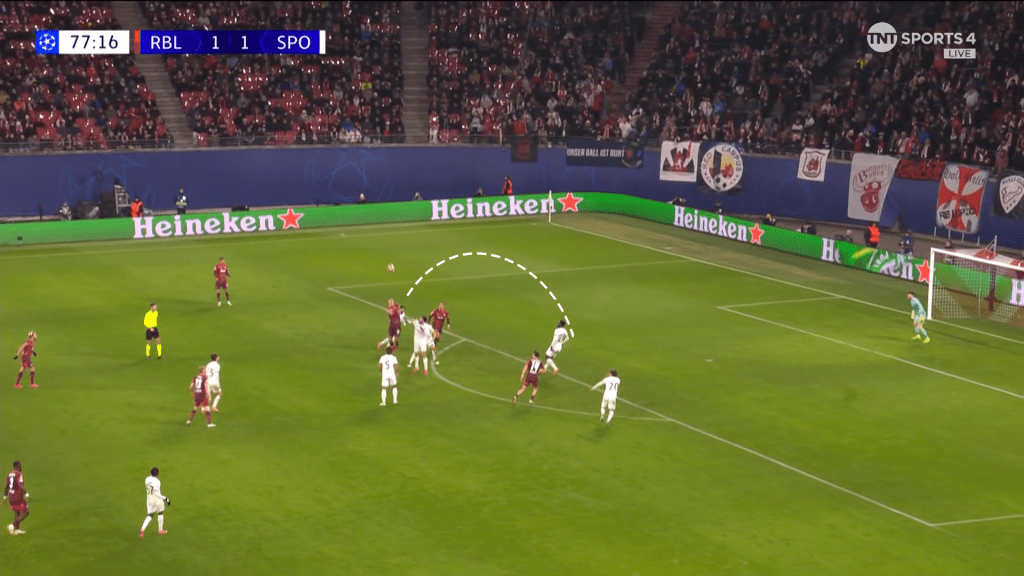
It was an aerial duel that Sesko was involved in that decided the outcome of the game. He was first to a falling ball and headed well into a dangerous area, culminating Yussuf Poulsen’s winner for the German side.
So Who’s Better?
This is an absolute nightmare of a question to answer. In almost every statistic Gyokeres wins out – but the fact that he is five years older than Sesko (who is still just twenty-one!), combined with Sporting’s game-to-game dominance in the Portugese league works against him.
| Sesko | Gyokeres | |
| Shots per 90 | 2.58 | 3.86 |
| Goals per 90 | 0.68 | 0.87 |
| Shot on target % | 56.6% | 48.8% |
| Successful take-on % | 44.8% | 47% |
| Progressive carries per 90 | 1.59 | 3.65 |
| Shot-creating actions per 90 | 1.65 | 4.39 |
| Expected Assists (xA) per 90 | 0.05 | 0.23 |
Essentially, Victor Gyokeres is the ‘proven asset’. His consistency over the past two years with clinical finishing, elite level link up play and ability to turn up on a big occasion – such as hat-trick against Manchester City earlier this season – is indicative that he is a more complete forward at this moment than Benjamin Sesko.
At 21, Sesko is demonstrating exceptional levels of performance, and is doing so in a Leipzig team who have the second least shots of any team in the Bundesliga this season. Compared to Gyokeres, the Slovenian is feeding off scraps which has undoubtedly turned figures out of his favour. He is far closer to Gyokeres’ level than is otherwise suggested.
One thing is certain: both strikers would be an asset to whoever signs them.
 Pressing Issues
Leave a comment