Giving Opponents A Chance
Over the past season and a half, Arsenal’s style of play has evolved into one that focuses on dominating opponents – an approach designed to kill the possibility of the opponents creating chances.
This is achieved by holding possession high up the pitch and relying heavily on winning the ball back quickly when possession is lost. When this fails, or if they are trying to defend a lead, they are able to transition into what at times, has been an impenetrable defensive shape. Mikel Arteta has drilled the importance of defending transitions effectively into his players.
Yet in recent weeks, Arsenal’s home form has become a worry. Arteta’s men have fallen into the habit of going through games with wave upon wave of attack, just to concede a low-percentage chance down the other end.
Dominance For Dominance Sake
In last week’s North London Derby, Tottenham scored with their second shot of the game (and Kulusevski should’ve scored with their first). It came after 25 minutes of Arsenal attacks.
In the FA Cup against Manchester United, the visitors didn’t manage a shot until 24 minutes in – the first time in the game that they sustained a spell of possession.
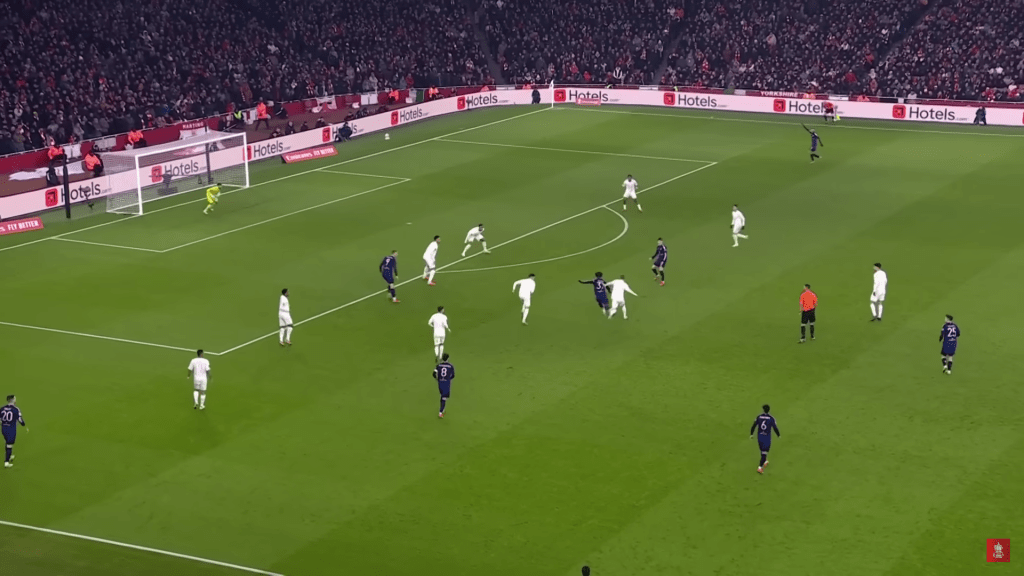
Against Newcastle, Arsenal had 6 big chances to the Magpies 2, but lost the game 2-0. Striker Alexander Isak scored with his first attempt at goal.
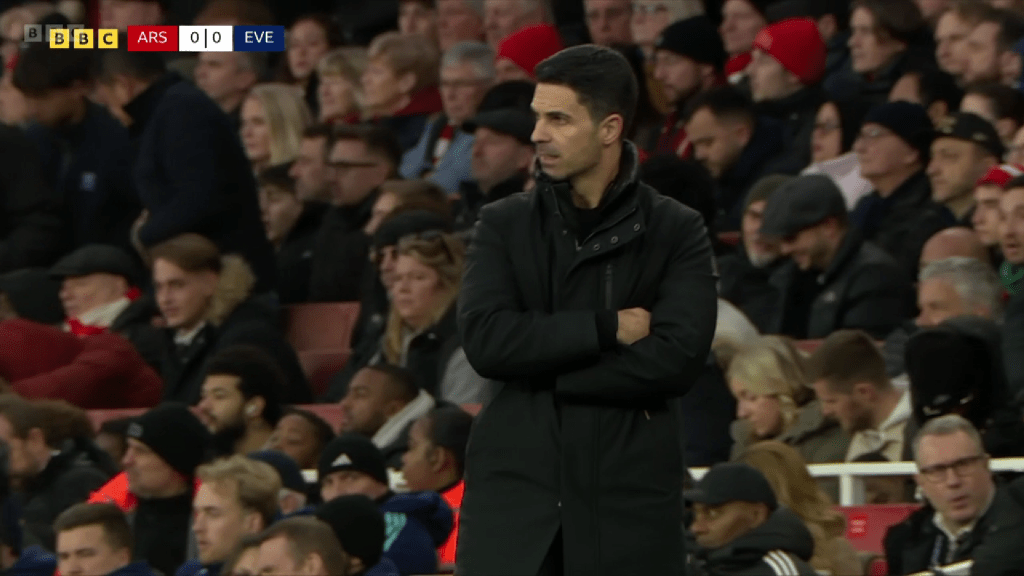
Their goalless draw at home to Everton in December is further evidence of this. The hosts limited Everton to just 2 shots and 0.09 xG to Arsenal’s 1.22, but failed to capitalise on a host of chances.
Less Efficient At Everything
One of the recent narratives about Arsenal’s bad form is that they aren’t being clinical enough in front of goal. This is certainly one side of the argument – Kai Havertz produced 1.9 xG alone in their FA Cup clash with Manchester United but failed to find the net. But it doesn’t reveal the whole story.
Arsenal’s two most recent home league games, Aston Villa and Tottenham, saw them concede 1.0 and 0.8 xG respectively. This ranks second and third on the most xG they have conceded in the league this season – only behind their 1-1 draw with Brighton which involved Arsenal playing with 10 men for a large part of the game.
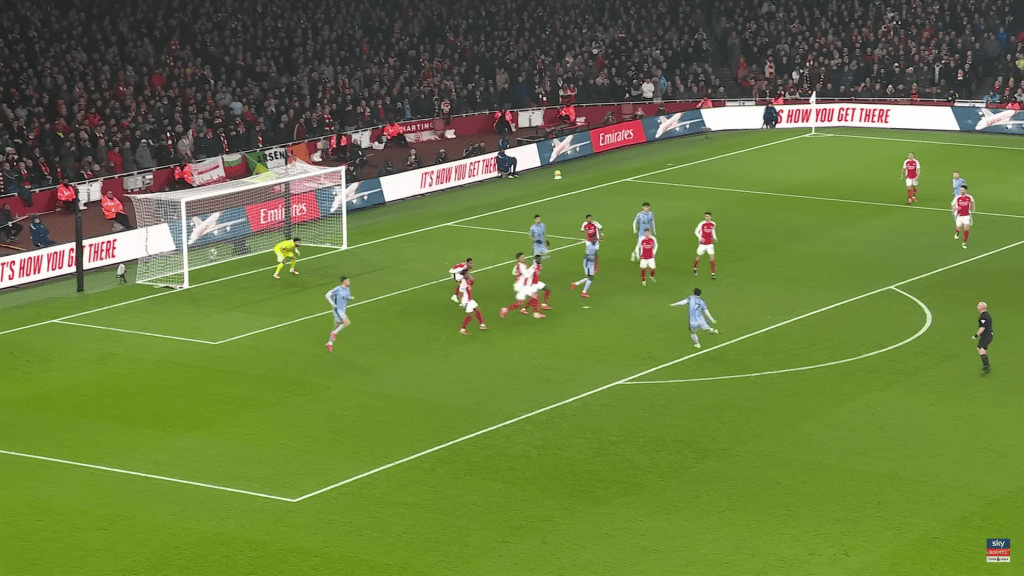
This is indicative of Arsenal’s difficulties sustaining their superiority for extended periods. They have become prone to allowing opponents a chance – and those teams with the quality to take it have become tricky opponents for the Gunners.
Conversely, they produced 1.3 xG against Villa, 1.4 against Tottenham and 1.2 against Everton, which ranks 6th, 7th and 8th for the xG output in the Premier League this season – out of 11 games.
Essentially, Arsenal aren’t producing as much threat in front of goal, and are allowing more opportunity for opposition. The measure of dominance that they established last season has certainly lessened – thus they have struggled with home results in recent weeks.
What’s Caused This?
As for why this is – injuries have a large part to play. Only Tottenham have sustained more individual injuries to players (which have resulted in a player missing a game) this season, which has led to Arteta constantly having to rotate his side. This is most notable in defence, where Arsenal have named 12 different back four combinations across 21 league games so far this season.
This has prevented Arsenal from building the stability that was so vital in their title bid last season. A constantly rotating back four has stopped any kind of rhythm being built up. This can be seen to have impacted the result of the Villa game, as just days before a different back four saw out a one goal lead against Tottenham without any drama, but different personnel made a series of errors to allow Villa to escape the Emirates with a point.
Injuries to attacking players such as Bukayo Saka and Martin Odegaard has also greatly impacted things in the attacking third.
Looking ahead to their Champions League fixture against Dynamo Zagreb on Wednesday, it is imperative that Arsenal gain a positive home result.
 Pressing Issues
Leave a comment